In shortChoose the large heated catamaran for enclosed seating, toilets, a cafeteria and step-free boarding: operator vessels carry 168 to 195 passengers and the fare includes the port tax and an on-board guide. Choose a small yacht for deck time and closer approaches, with 26 passengers on 15-metre boats and a hot drinks service. Penguin landings are a separate format again.
4 hoursNavigation with minitrekking
from US$1103.5-hour yacht sailing
168-195Catamaran passengers
26Passengers on the yachts
Beagle Channel catamaran vs sailboat: what changes on board
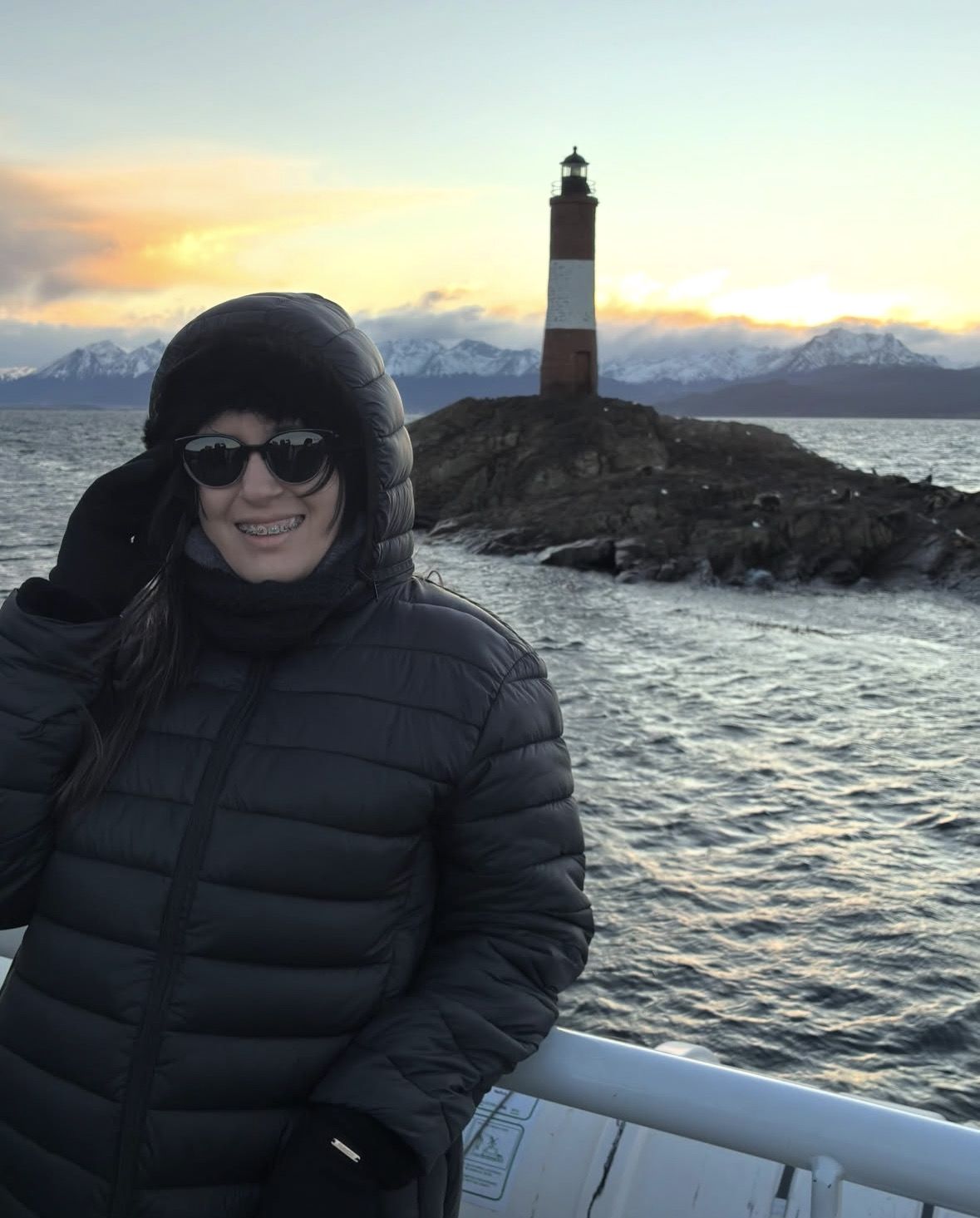
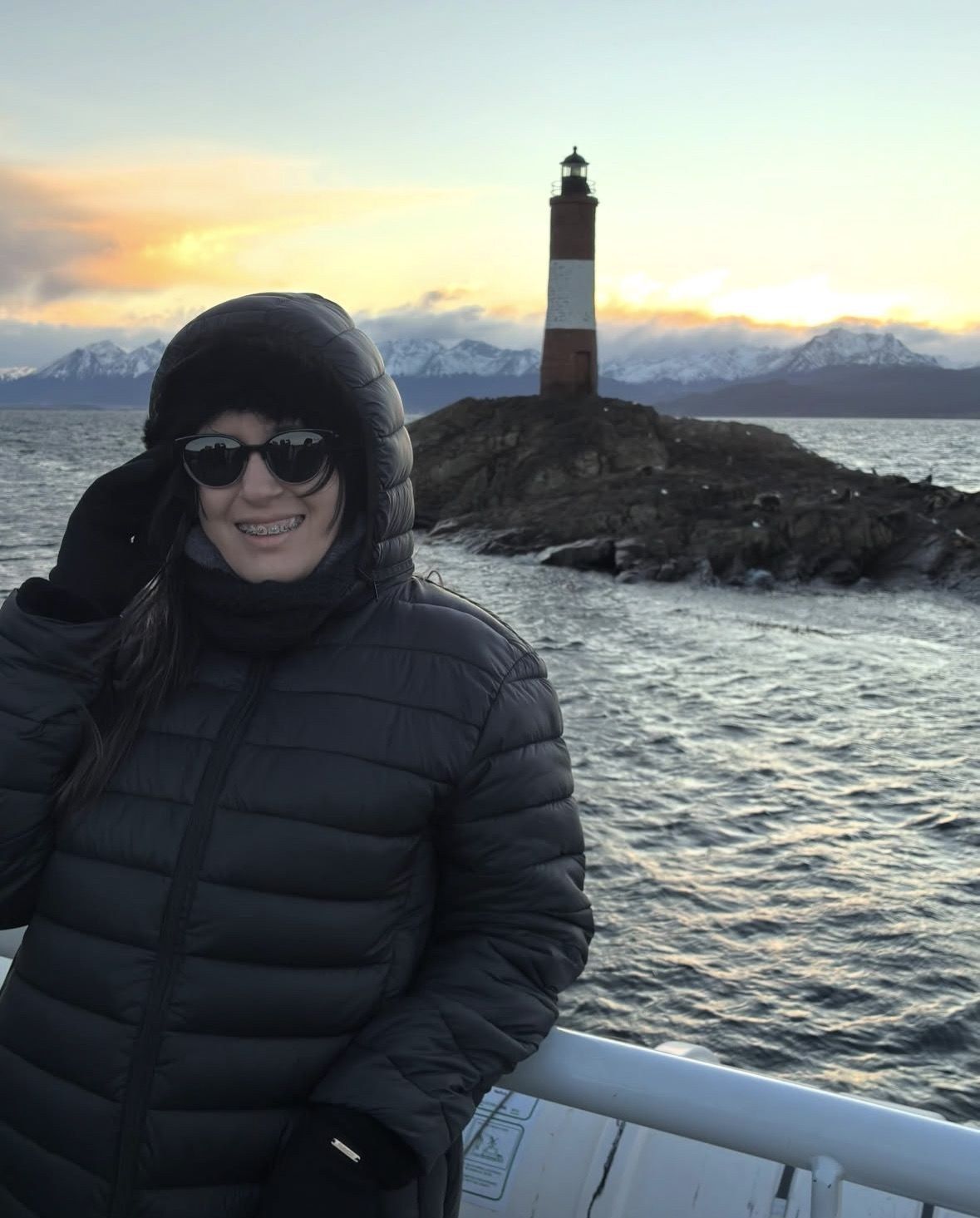
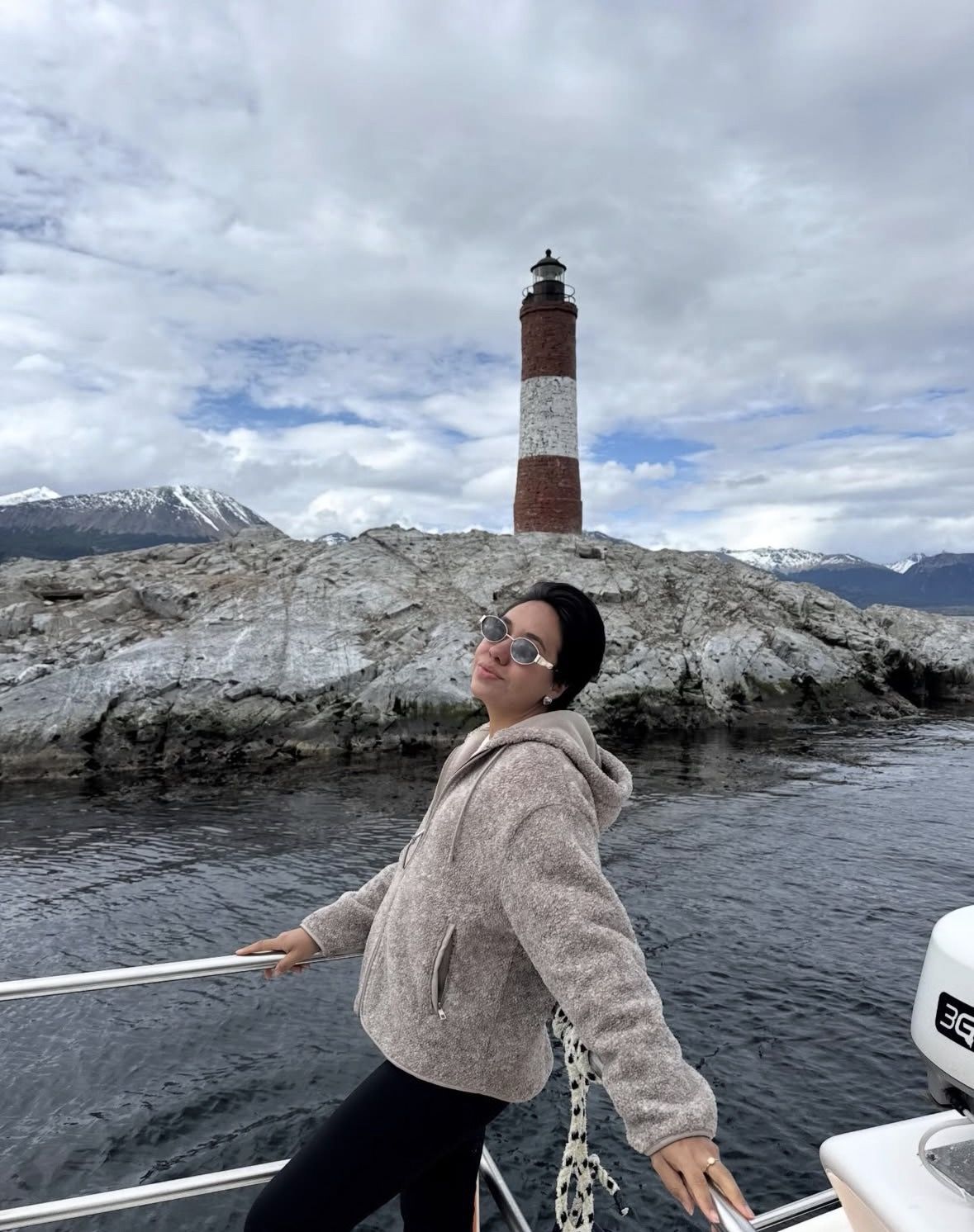
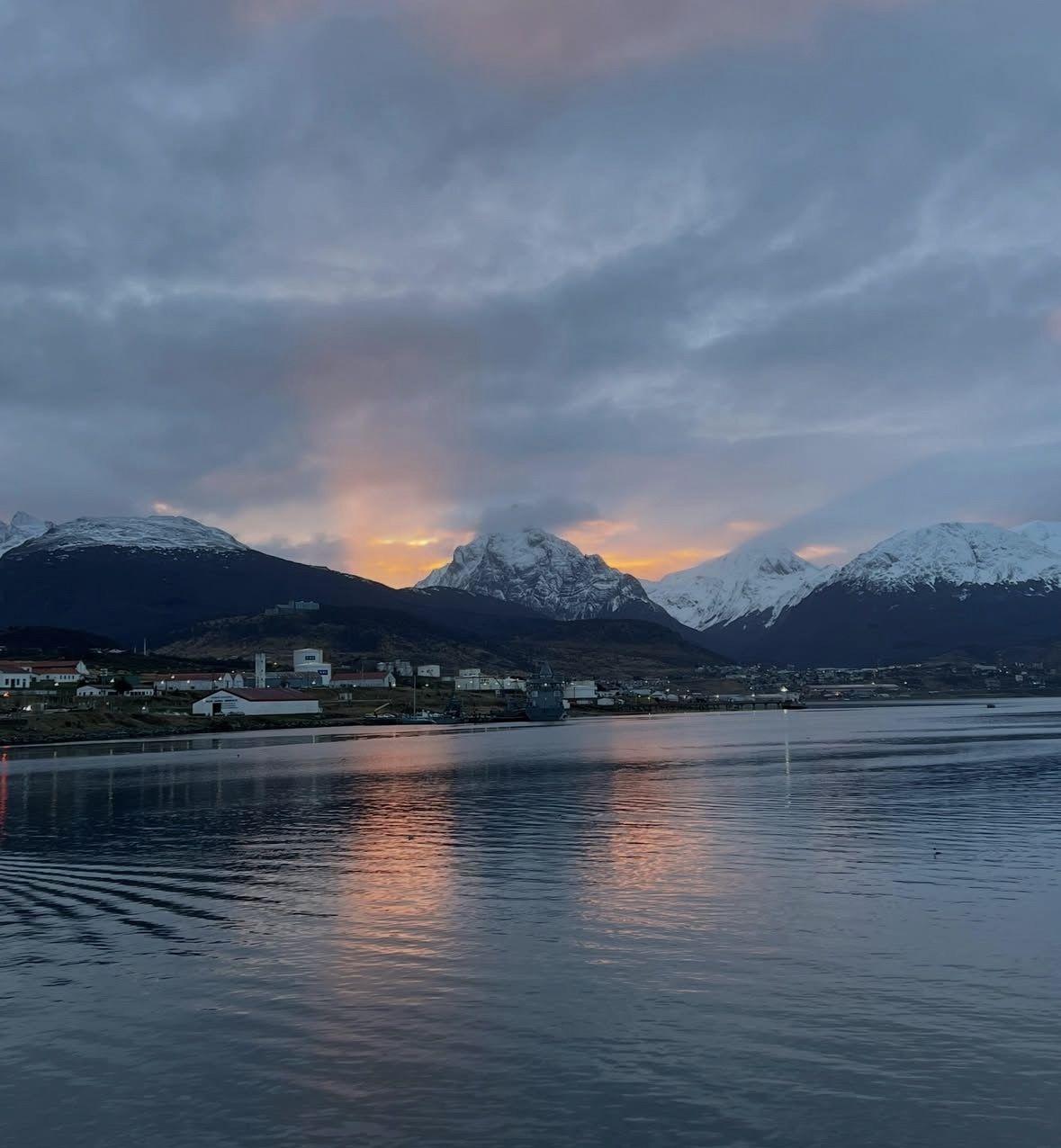
Both formats work the same sheltered water. Darwin measured the channel at roughly 120 miles long with an average breadth of about two miles, which is why boats here sail a protected inland waterway rather than open ocean, and why the decision is really about what happens on board. The short lighthouse route is the same shape whichever hull you take: bird and sea lion islets close to town, the turn at the Les Eclaireurs lighthouse about 20 km from Ushuaia, and on most itineraries a landing in the Bridges Islands.
A large catamaran keeps you behind glass in a heated saloon with toilets, a cafeteria and a professional guide, and the port tax sits inside the fare. Capacity runs from 168 to 195 passengers depending on the vessel. The yacht format is two 15-metre Grand Banks boats taking 26 people over 4 hours, with a hot drinks service and the port tax included; that itinerary visits Isla Alicia, Isla de los Pájaros and Les Eclaireurs, which it dates to 1919, and lands on Isla Bridges for an interpretive trail past what it describes as the largest shell middens in the region.
The practical difference is heat and headcount. On a catamaran you can sit out a squall indoors with a coffee. On a yacht you spend most of the trip outside, in wind the provincial tourism authority describes as constant, with an annual average around 6°C and sun, rain and snow all possible in a single day.
| Format | Duration | Passengers | On board | Time ashore |
|---|
| Navigation with Minitrekking, from US$100, 4.8 ★ (724 reviews) | 4 hours | Not stated | Cafeteria with coffee, tea and hot chocolate; food is not served on board | Island walk (minitrekking) |
|---|
| Sailing Ushuaia Beagle Channel in a yatch, from US$110, 4.9 ★ (11 reviews, a small sample) | 3.5 hours | Not stated | Coffee and/or tea; a harbour tax of about US$3 is not included | None stated |
|---|
| Large heated catamaran (operator itineraries) | 3 hours on the lighthouse route; one operator lists 2 h 30 min for its catamaran | 168 to 195 depending on the vessel | Heating, toilets, cafeteria, on-board professional guide, port tax included | Short guided walk in the Bridges Islands, about 20 minutes on one itinerary |
|---|
Four hours, with a walk ashore
A half day that covers the islets and the lighthouse turn and still gets you onto land: 4 hours afloat, from US$100, 4.8 ★ (724 reviews), and the only sailing listed on this site with time ashore written into it.
★ 4.8/5 · 724 reviews
What the big heated catamaran gives you
One operator's 3-hour lighthouse cruise states its inclusions plainly: the port tax, a heated catamaran with toilets and a cafeteria, and an on-board professional guide. Transfers to or from the tourist pier, on-board purchases and the photo service are outside the fare. That cruise runs daily all year, with both morning and afternoon departures, so it is the format that still exists in July.
Access is the strongest argument for the big boats. What a yacht cannot match is the way you get on and move around: ramps, wheelchair space and adapted toilets are listed for one operator's catamaran channel cruises, which it calls suitable for people with reduced mobility, while a second company lists facilities for reduced mobility and strollers on its boats. A standard catamaran trip of 2 h 30 min on a third operator includes the port tax and a Spanish and English speaking guide.
Two things to plan around. The landing on Isla Karelo is a short easy walk, but it can be cancelled for safety, for example when there is ice or frost in winter, so treat it as likely rather than guaranteed. The cafeteria is also the only food source on some hulls, since one company refuses food brought aboard that was not bought from it.
- Enclosed heated seating, toilets and a cafeteria on board
- On-board professional guide and the port tax inside the operator's fare
- Step-free boarding on one operator's catamarans, with space for wheelchairs and adapted toilets
- Daily departures all year on the lighthouse route, morning and afternoon
- 168 to 195 passengers, so expect to share the rail at the sea lion islets
What a small yacht gives you
The yacht version of the short route runs 4 hours on two 15-metre hulls with 26 passengers, includes the port tax and a hot drinks service, and puts you ashore on Isla Bridges. Fewer people on deck means you are not queuing for a position when the boat holds off a cormorant colony, and the low freeboard puts you much closer to the water than a catamaran window does.
Among the sailings listed here, the small-boat category is filled by one trip of 3.5 hours, Sailing Ushuaia Beagle Channel in a yatch, with a starting fare of US$110 and a rating of 4.9 ★ built on 11 reviews, a sample too thin to lean on hard. Hot drinks run to coffee and/or tea, and a harbour tax of about US$3 sits outside the price. You collect the boarding pass at a small house carrying the boat company's name and arrive 30 minutes before the sailing time.
Comfort on a yacht tracks the weather far more than it does on a catamaran. Summer averages run about 10 to 15°C with up to 18 hours of daylight, which makes a late slot genuinely usable for low light; the provincial authority calls late March to May the ideal time for photography, usually below 10°C with increasing frosts by May. Dress for a full trip outdoors with a windproof and waterproof shell over a warm mid layer, in January as much as in April.
Combined days with the national park or the eastern estancia
Pairing the water with Parque Nacional Tierra del Fuego works because the short cruise has both morning and afternoon departures all year: a morning in the park, an afternoon on the channel. The park protects more than 68,000 hectares as Argentina's southernmost protected area, its southern boundary is the channel shore, and its office is in town at San Martín 1395. The park entrance fee is never part of a boat fare, whatever the hull, and the train ticket does not cover it either: the rates in force from 1 June 2026 are AR$40.000 general, AR$18.000 for Argentine nationals, AR$12.000 for students and AR$8.000 for provincial residents, while under-7s and retirees holding Argentine DNI go in exempt.
A longer version of the same idea bundles the End of the World Train into a 10-hour day. The train itself is a short ride rather than a transfer: the round trip from Estación Fin del Mundo, on National Route 3 at Km 3065 about 8 km from the centre, takes 1 hour 50 minutes, with three stations, about 20 minutes at La Macarena for the waterfall and viewpoints and an audio guide in ten languages.
The eastern combination swaps the park for Estancia Harberton, at Ruta J Km 43 about 90 km from Ushuaia, founded in 1886 and still run by the fifth and sixth generations, with the Museo Acatushun on site. One operator's combined boat-plus-walk day runs every day except Tuesday from 15 October 2026 to 15 March 2027, roughly 7 hours by land and 3 hours by boat, leaving the tourist pier at 08:30 (out by bus, back by boat around 16:30) or at 10:30 (out by boat, back by bus around 18:30). Nothing runs to Harberton on Tuesdays, because the estancia, open to the public 11 October to March from 12:00 to 19:00, closes that day and also on 25 December and 1 January; its entrance fee is charged separately.
Penguins from the deck or on foot on Isla Martillo
The colony sits on Isla Martillo, about 90 km east of Ushuaia, far beyond the turn of the short lighthouse route. No other penguin colony exists in Tierra del Fuego, so the hull you pick decides whether you see the birds at all: Magellanic and Gentoo penguins occupy the island from October to April, and king penguins turn up only now and then. Reserve status shapes what any boat can do there, since the island is protected ground and visits happen in small groups with a professional guide alongside. Operators themselves say the birds thin out at both ends of that window, which makes a sailing booked in the first or last weeks a gamble.
The catamaran version is a viewing trip and nothing more. It runs 5 hours on a vessel of 168 to 195 passengers, sails October to March, and watches the Magellanic colony from the water; one operator states outright that nobody goes ashore on Isla Martillo at any point and that the birds are seen from the boat a few metres away. On this site the penguin sailings are a 5-hour boat trip from US$230, rated 4.3 ★ (115 reviews), and a 5-6 hour catamaran from US$240, rated 4.2 ★ (127 reviews), neither of which states time ashore.
The walk is a different product with different physical demands. Your choice of boat is made for you on this one: a single operator says on its own homepage that it holds the only authorisation to walk with the penguins, and the walk itself lasts one hour with a specialist guide. Because the island has no pier, you cross by zodiac and step straight onto it using stairs and a gangway; the tour is rated low difficulty but it is not recommended for pregnant women and is not suitable for people with reduced mobility. The land-based version lasts 7 hours, travelling by road along National Route 3 and Ruta Complementaria J, with a zodiac crossing of about 15 minutes and a sunset return, and the Harberton entrance fee is not included.
Best boat for the Beagle Channel: a short decision list
When the catamaran-against-yacht comparison ends in a draw, let the 4-hour Navigation with Minitrekking settle it, at US$100 to start and 4.8 ★ across 724 reviews. It is the only sailing listed here with time ashore stated, it covers the islets and the turn at Les Eclaireurs, and the cafeteria serves coffee, tea and hot chocolate while food is not served on board, so eat before you board. Plan to be at the Patagonia Explorer office in the tourist port, Avenida Prefectura Naval Argentina at Calle Roca, 30 minutes before the stated departure.
Book the sailing early in your stay whichever format you choose. Cancellations are announced officially by the Prefectura Naval Argentina, otherwise boats leave on schedule, and local operators advise scheduling the navigation at the start of a trip so a weather day still leaves room to sail later.
- Best for families: the heated catamaran formats, with enclosed seating, toilets, a cafeteria and, on one operator, facilities for reduced mobility and strollers.
- Best for photographers: the 3.5-hour yacht sailing from US$110, with deck access throughout and a late slot that works in summer daylight of up to 18 hours.
- Best for limited time: the 3.5-hour yacht sailing if you have half a day, or the 4-hour navigation with minitrekking if you want a walk ashore in the same slot.
- Best for penguins seen from the water: a 5-hour or 5-6 hour penguin navigation between October and March, accepting that nobody lands.
- Best for penguins on foot: the zodiac landing day, which is unsuitable for reduced mobility and not recommended in pregnancy, and which has to be planned around Harberton's Tuesday closure.
- Best for reduced mobility: a catamaran channel cruise with ramps, wheelchair space and adapted toilets, and no Isla Martillo landing.
Questions people ask
Which boat type is better if I am prone to seasickness?
The large heated catamaran, because you can stay inside in enclosed seating with toilets on board. Neither hull is fighting ocean swell out here: Darwin's survey put the channel at roughly 120 miles long with an average breadth of about two miles, which describes an inland waterway with land close on both sides. A yacht keeps you outside for most of the trip, which some people find easier and others do not.
Can I bring my own food on board?
At least one company will not take food aboard that passengers did not buy from it, so a packed lunch may not travel with you depending on the boat. The 4-hour Navigation with Minitrekking includes cafeteria service with coffee, tea and hot chocolate, and food is not served on board; the 3.5-hour yacht sailing includes coffee and/or tea. Eat before you sail on either.
Do both formats sail in winter?
Departures carry on from the port area through the whole calendar, and the catamaran is the format with published winter dates: one operator's 3-hour lighthouse cruise sails daily year round, morning and afternoon. Reckon on 1°C to 6°C on average, about 7 hours of daylight, snow at its heaviest in July and August, and an island landing that can be called off for safety when there is ice or frost. Heating and an enclosed saloon matter much more in those months.
Is the port tax included in the fare?
On the catamaran cruises the operator's fare includes the port tax along with the heated vessel, toilets, cafeteria and an on-board professional guide, and the yacht itinerary also includes the port tax with its hot drinks service. The 3.5-hour yacht sailing listed on this site states a harbour tax of about US$3 that is not included. One operator's combined penguin day excludes the port fee as well, so read the inclusions line for the exact format you pick.
Morning or afternoon departure?
Take the morning sailing as a first choice, because it leaves the rest of the day free if the Prefectura Naval announces cancellations. Summer runs to as much as 18 hours of daylight, and that is what makes a late slot worth picking on a yacht, where you are out on deck in the low sun. In winter, with about 7 hours of light, an afternoon sailing finishes close to dusk.
Read also