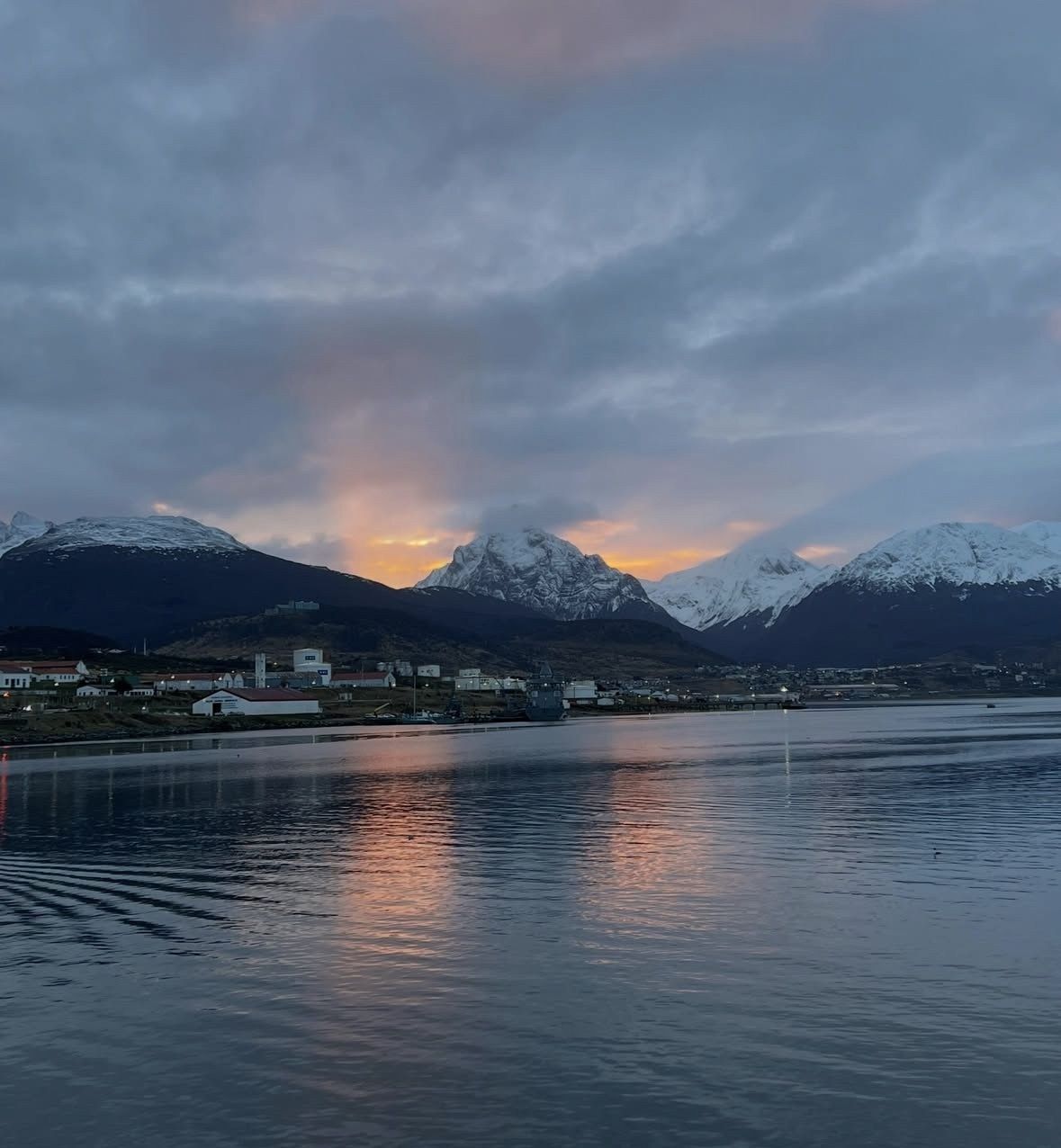
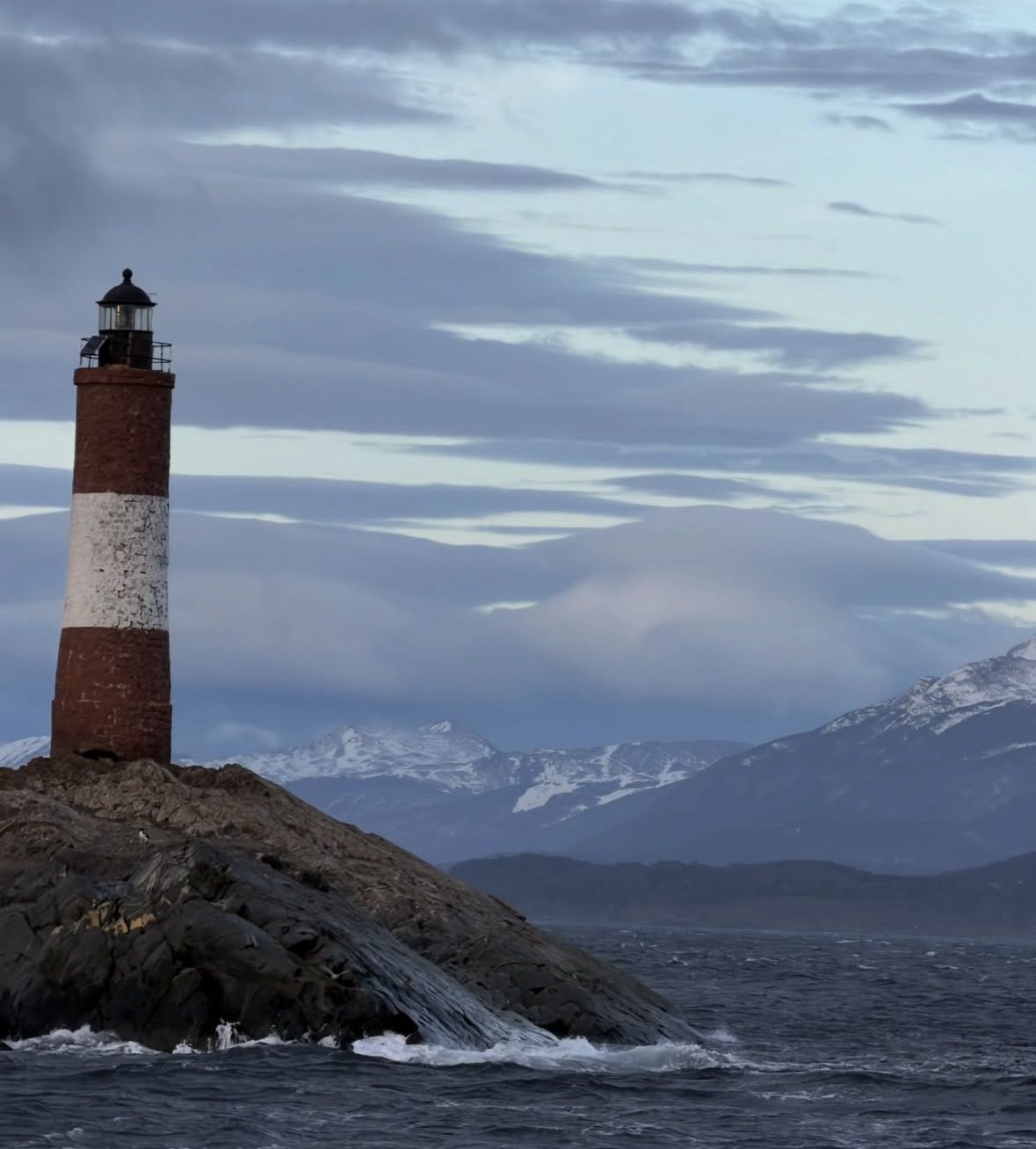
In shortBeagle Channel weather is cool, maritime and windy all year. The provincial authority gives summer averages of about 10-15°C with up to 18 hours of daylight, and winter averages of 1°C to 6°C with about 7 hours of light and heaviest snow in July and August. Around 6°C is the yearly mean, and a single day afloat can serve you sun, then rain, then snow, which is why no one forecast settles what to wear on deck.
about 6°Cannual average temperature
up to 18 hourssummer daylight
about 7 hourswinter daylight
1°C to 6°Cwinter averages
Beagle Channel weather in one paragraph
The provincial tourism authority describes the climate of Tierra del Fuego in terms that fit the water as well as the town: cold and wind are constant, the annual average sits at around 6°C, and sun, rain and snow can all occur on the same day. That last point is the one that catches people out. A clear sky over the port at nine in the morning carries no promise about what the deck will be like two hours later.
Nothing here behaves like a hot or a freezing climate. Summer averages land at about 10-15°C and the authority says temperatures rarely climb above 25°C; winter averages run from 1°C to 6°C. The annual spread is narrow, so the variables that actually shape your day are wind, light and precipitation rather than the thermometer.
What that means practically: choose your dates around daylight hours and the penguin season, since the temperature range barely moves. The seasonal recommendation, month by month, sits on the when-to-go page of this site, and the layer-by-layer list is on the clothing page.
Ushuaia weather by month, season by season
The official provincial climate page splits the year into three useful blocks rather than twelve. Summer is the long-light season with mild averages. Late March to May is the autumn window the same authority calls ideal for photography and hiking, when the forests change colour, temperatures usually stay below 10°C and frosts become more frequent as May approaches. Winter brings the lowest means, the shortest days and the deepest snow.
Frost is worth singling out because it builds through autumn rather than appearing overnight. By May it is a regular feature, and in winter ice or frost on a landing site is one of the stated reasons a shore walk can be called off for safety while the boat still sails.
| Period | Temperatures | Daylight | On the water |
|---|
| Summer | mean of roughly 10-15°C; the 25°C mark is rarely passed | up to 18 hours | a mid-afternoon departure still has hours of light on deck |
|---|
| Late March to May | mostly under 10°C, with frost more frequent the closer you get to May | shortening through autumn | forest colour along the shore; frost starts to affect landings |
|---|
| Winter | mean between 1°C and 6°C; July and August take the heaviest snow | about 7 hours | sailings continue; take the morning slot and expect the walk ashore to be conditional |
|---|
The sailing that works in any season
Four hours on the water with a walk ashore, from US$100 and rated 4.8 ★ (724 reviews), bookable early in your stay and cancellable free up to 24 hours before departure if the forecast turns.
★ 4.8/5 · 724 reviews
Why the wind matters more than the thermometer
Wind is the permanent factor in the forecast, and it is the one that decides whether you step onto an island. The provincial authority lists cold and wind as constant; on the channel that translates into spray, apparent wind on deck and a chop that the promenade never shows you. The same air temperature feels entirely different standing at the bow at 20 knots.
Daylight is the second lever. Up to 18 hours in summer makes an afternoon or early-evening sailing a genuine option, with low light across the water for the last stretch. About 7 hours in winter does the opposite: a late-afternoon departure finishes close to dusk, which is the plainest argument for booking the morning sailing between June and September.
How weather affects a sailing, and who decides
One authority alone suspends a channel departure, and that is the Prefectura Naval Argentina, which publishes the decision officially. Until that announcement comes, boats leave on schedule. Operators do not call it off because the sky looks grey, and you should not plan on turning up at the pier and reading the weather yourself.
The landing is a separate decision from the sailing. One operator states outright that the walk ashore on its short cruise can be cancelled for safety, giving ice or frost in winter as the example. So a winter or late-autumn departure can go ahead in full while the island section is dropped, and that is a normal outcome rather than a failure.
Two things follow. Put the navigation early in your stay, as the local operators themselves advise, so a suspended day still leaves room to sail later in the week. And if the island walk is the reason you are going, weight your dates towards the months when frost is not a factor.
- The official word on a suspension comes from the Prefectura Naval Argentina and from nobody else
- Boats otherwise depart as scheduled, including in winter
- The shore landing can be cancelled on its own, for example for ice or frost
- Morning departures leave the rest of the day to re-book
What December and the peak summer months feel like
December through February is when the figures are at their friendliest: averages of about 10-15°C, the odd day above that but rarely over 25°C, and daylight stretching to as much as 18 hours. You can sail at 15:30 and still be photographing in good light on the way back.
Mild does not mean still. Cold and wind remain constant through summer, so the deck of a boat in January asks for a windproof outer layer even when the thermometer in town reads 14°C. Visitors who pack for a European summer spend the sailing inside, which rather defeats the point of being out there.
Booking a sailing with a buffer day
Build one spare day into the plan and the whole weather question stops being stressful. Beagle Channel boat tours run from the port all year, according to Ushuaia's tourism board, so a day lost to a suspension is usually recoverable if you have not scheduled the sailing for the morning of your flight out.
The practical sequence: sail on your first or second full day, keep a later day open as the fallback, and choose a tour you can move without penalty. The 4-hour Beagle Channel Navigation with Minitrekking on this site, from US$100 and rated 4.8 ★ (724 reviews), allows free cancellation up to 24 hours before departure, which means committing to an early date costs you nothing in flexibility.
Questions people ask
Can you sail the Beagle Channel in winter?
Yes. The port keeps sending boats out through the cold months, as Ushuaia's tourism board confirms, and the numbers you plan around are 1°C to 6°C and roughly 7 hours of usable light. Take the morning departure, and treat any island walk as conditional, since ice or frost is a stated reason for cancelling the landing while the sailing itself goes ahead.
How much colder does it feel on deck than in town?
The published averages are town figures. On the water you add wind and spray to whatever the thermometer says, and the provincial authority describes cold and wind as constant year round. Treat the summer 10-15°C as the starting point rather than the final number, and see the clothing page on this site for the layers.
Is there a rainy season to avoid?
Tierra del Fuego has no distinct wet and dry season: a single day can bring sun, then rain, then snow, and July and August bring the heaviest snow. Plan for all three on any date rather than trying to pick a dry window.
Which months suit photography best?
Late March to May gets the explicit nod from the provincial tourism authority for photography and hiking, the weeks when the forest colour turns. Expect temperatures usually below 10°C and more frost the closer you get to May. In high summer the alternative is the low light of a late departure, with up to 18 hours of daylight behind it.
Does an abrupt change of weather affect which trip I should choose?
It affects the timing more than the itinerary. Any sailing can be suspended by the naval authority, so book early in your stay and keep a later day free. If a shore landing is the point of the trip for you, favour the months when frost is not building up, and take the morning slot.
Read also