In shortMost Beagle Channel sailings are calm. Darwin described the channel as roughly 120 miles long and about two miles wide on average, so boats stay in a sheltered inland corridor rather than open ocean. Wind can still raise short choppy sections near exposed islets and on the long eastern run to Isla Martillo, about 90 km away. A short route near town on a large heated boat is the gentlest first trip.
about 2 milesaverage width, per Darwin
20 kmout to the lighthouse turn
4 hoursnavigation with minitrekking
4.8 ★ (724 reviews)rating of that sailing
Beagle Channel seasickness is uncommon in sheltered water
The Beagle Channel is a strait, and that single fact settles most of the worry. Darwin, who sailed on the Beagle's second voyage of 1831 to 1836, put it at roughly 120 miles long with an average breadth of about two miles, and the boats leaving the tourist pier in Ushuaia work inside that corridor with mountains on both sides. On a calm morning the water is flat enough to stay outside on deck from the pier to the lighthouse and back.
What changes conditions here is wind rather than ocean swell. Cold and wind are constant in Tierra del Fuego, where sun, rain and snow can all turn up in the same day, and a hard blow down the channel can build short, steep chop in a matter of minutes. It also drops away just as fast, because there is no open-ocean fetch behind it.
Wave heights vary from day to day, and there is no fixed seasonal pattern to plan around. What the geography does tell you is that exposure rises where the route leaves the bay and passes isolated rocks, and that the longer you are afloat, the more chance you have of meeting a windy hour.
If your stomach is the deciding factor, start short. A three to four hour itinerary near town on a large heated boat is the sensible first sailing, and you can judge from that whether a five hour eastern penguin day is worth booking later in the week.
Which parts of the route feel calmest
Nearly all of the short cruise happens inside the first 20 km of water from the port, which is the most enclosed part of the route. Bahía Ushuaia itself is usually smooth. The bird islet and the sea lion islet are passed slowly, close in, and the engines come down to idle for the viewing, which is when most passengers forget about motion entirely.
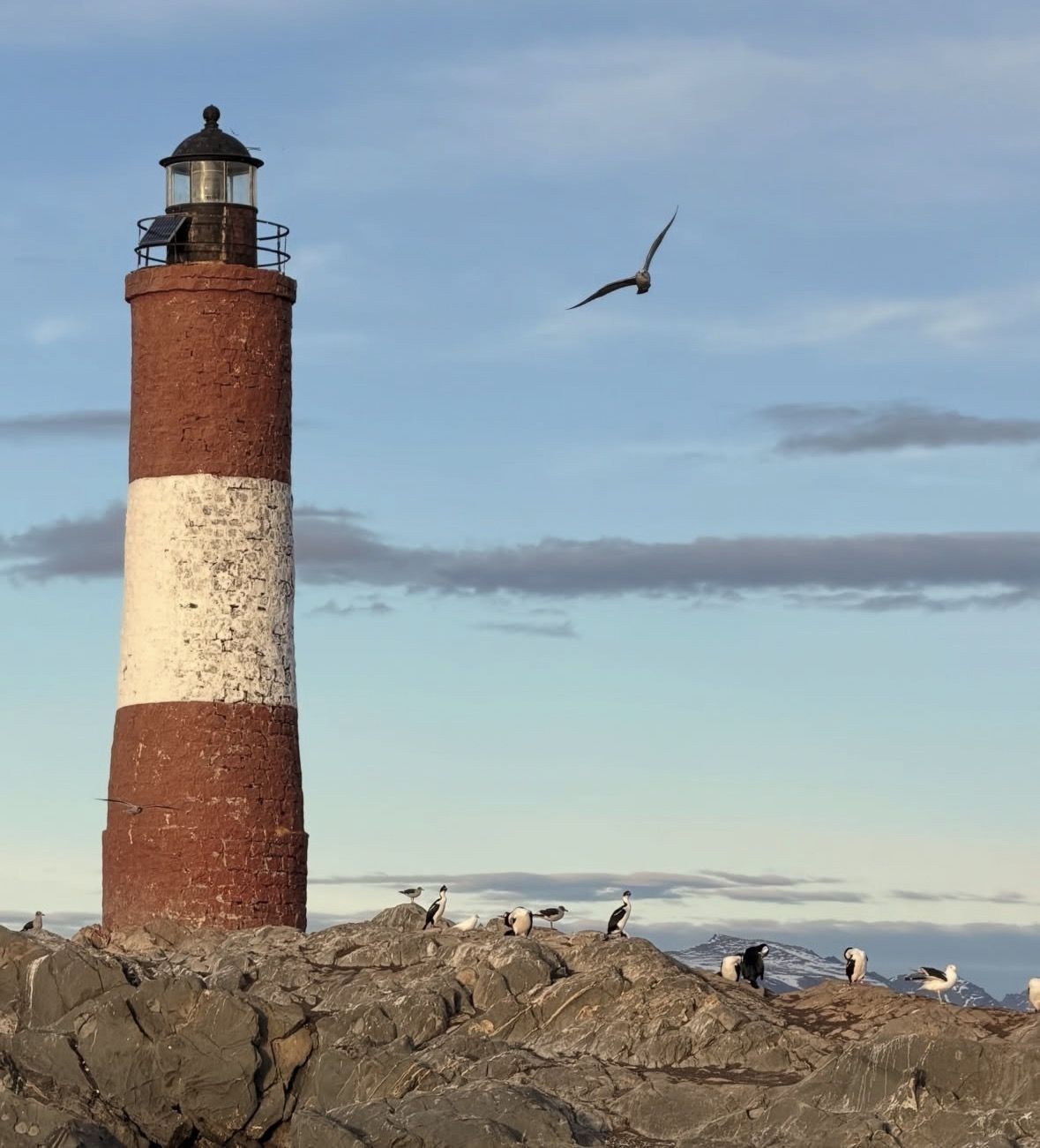
The turn at Les Eclaireurs, about 20 km from town, is the one point on the short route where you sit off bare rocks with less shelter around you. Boats hold there for photographs and then come back over the same water. On the versions that land, the stop in the Bridges group gives you twenty minutes or so on solid ground halfway through, a welcome break for a queasy passenger.
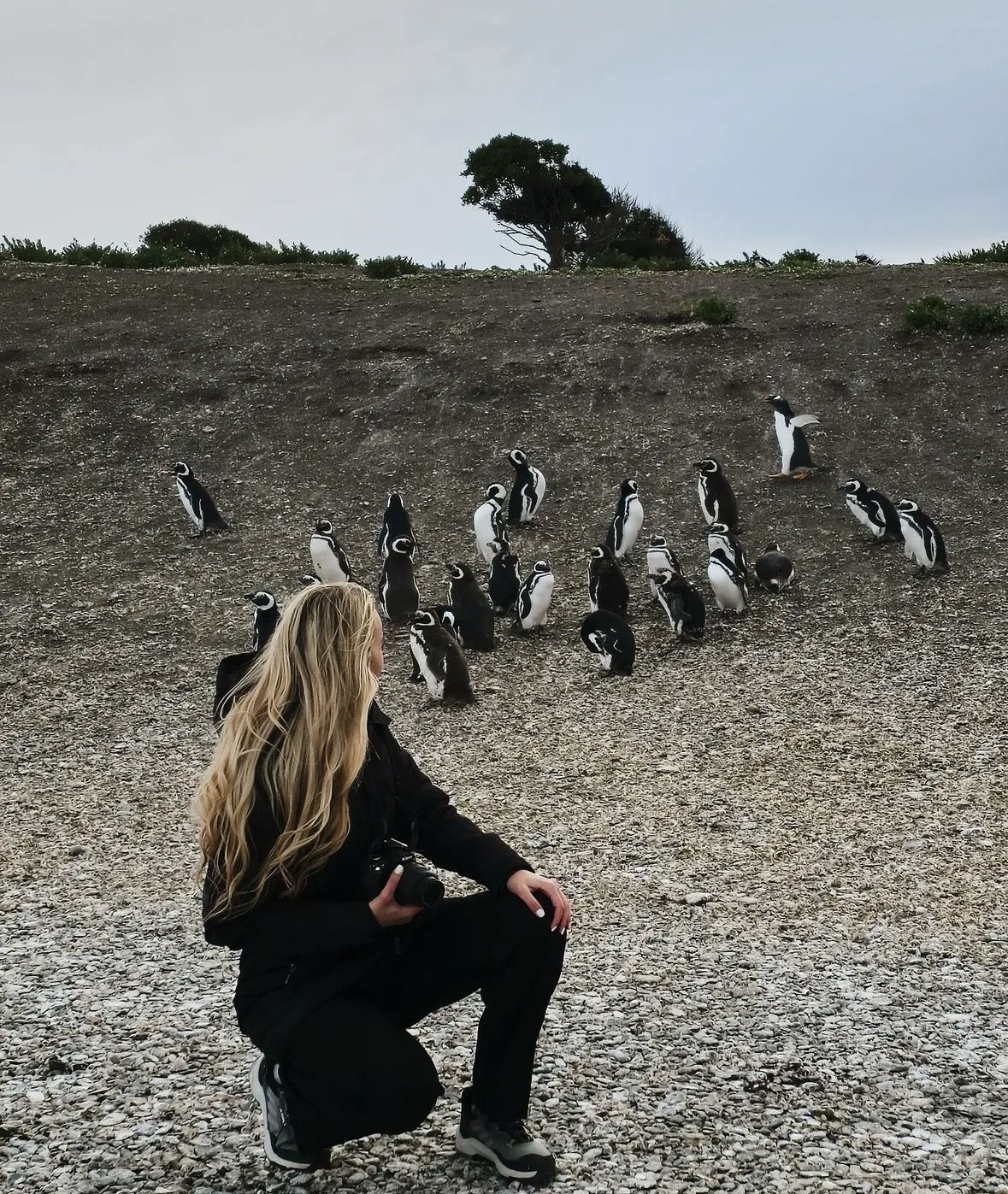
The eastern side is a different proposition. Isla Martillo lies about 90 km from the pier, so the penguin sailings spend hours in the open middle of the channel with far fewer islands in the way. Some companies cut that down by moving passengers out by road to Puerto Almanza, about 72 km along National Route 3 and Provincial Route J, or to Estancia Harberton, and starting the navigation from there.
- Bahía Ushuaia and the stretch out to the islets: narrow, enclosed, usually flat
- Isla de los Pájaros and Isla de los Lobos: slow passes at low speed, close to the shore
- The turnaround at Les Eclaireurs, about 20 km out: the most exposed point of the short route
- The Bridges group landing: a break on dry land, roughly twenty minutes on a guided trail
- The run east towards Isla Martillo, about 90 km from the pier: the longest time afloat and the least shelter
The short route, with a walk ashore
Four hours on the sheltered water near the pier, with time on solid ground on an island halfway through, which is the gentlest way to find out how the channel suits you.
★ 4.8/5 · 724 reviews
Big heated catamaran, small yacht or zodiac
The large catamarans are the right answer for a sensitive stomach. They carry between 168 and 195 passengers depending on the vessel, they are heated, they have enclosed seating you can retreat into when the wind gets tiring, and they carry toilets and a cafeteria. One operator also describes its channel catamarans as suitable for reduced mobility, with ramps, wheelchair space and adapted toilets. Weight and width are what matter here: a wide, heavy boat rolls slowly and predictably, and predictable motion is far easier to tolerate than a quick snap.
The yacht format is the opposite trade. It runs 4 hours on 15-metre boats carrying 26 passengers, visiting Isla Alicia, Isla de los Pájaros and the lighthouse with a landing on Isla Bridges, and the fare includes a hot drinks service. You get quiet, space at the rail and much better photography, and you feel every bit of the water. Take it if you have sailed small boats happily before.
The zodiac crossing to Isla Martillo is short, about 15 minutes, and there is no pier on the island, so you step off using stairs and a gangway. Graded low difficulty by the operator, the day still comes with two restrictions to weigh before you choose it: pregnant women are advised against it, and it cannot take passengers with reduced mobility.
| Format | Hours afloat | Boat | On board |
|---|
| Navigation with Minitrekking, on this site | 4 hours | Sailing with a walk ashore | No food on board, plus cafeteria coffee, tea and hot chocolate |
|---|
| Short lighthouse and islands cruise | 3 hours | Heated catamaran | Cafeteria counter, toilets within reach, guide commentary throughout |
|---|
| Yacht itinerary | 4 hours | 15-metre boats, 26 passengers | Hot drinks service |
|---|
| Eastern penguin navigation, watched from the boat | 5 hours | Catamaran, 168 to 195 passengers | Restroom on board |
|---|
Where to stand on board to feel less motion
Stay low and stay central. The middle of the main deck, close to the centreline, moves least, and the upper deck at the bow moves most. On a catamaran, that puts you in the seats around the middle of the saloon or on the open rail immediately outside them. Give the top-deck viewing platform a miss.
Face forward with the horizon in sight. That is the single most effective thing you can do, and it is also the reason the deck beats the heated saloon even when the wind is cold: your eyes agree with your inner ear. Put on the extra layer and go outside, come in for ten minutes to warm your hands, then go back out.
Keep your head still and your eyes off close objects. Reading the itinerary leaflet, scrolling your phone, scrolling back through photographs in the saloon: all of these bring on nausea faster than the sea does. Hold the rail with both hands when the boat is moving between stops so you are not constantly correcting your balance.
How to prevent motion sickness on a boat from Ushuaia
Preparation starts at the hotel, before you walk down to the pier. Medication for motion sickness works as a preventive and needs to be in you in advance, so take it before boarding and ask a pharmacist in town about timing and dosage for whatever you buy. Once you feel unwell, a tablet is too late.
Food matters in both directions. Boarding on an empty stomach is as bad as boarding after a plate of king crab, so eat something plain an hour or two beforehand. Plan on eating ashore: the 4-hour navigation on this site serves cafeteria coffee, tea and hot chocolate and states that no food is offered on board, and one channel company does not permit passengers to bring aboard food it did not sell them.
Being cold makes everything worse, and the deck is colder than the forecast suggests. Town averages run about 10-15°C in summer and 1°C to 6°C in winter, with an annual mean of around 6°C, and the apparent temperature on the water sits well below that once the boat is making way. A windproof shell, a hat and gloves keep you outside with the horizon in view, which is where you want to be.
- Take any medication before boarding, following the pharmacist's instructions
- Eat something light beforehand and do not board hungry
- Dress for the wind on deck, which is colder than the town forecast
- Face forward, keep the horizon in view, and stay amidships on the lower deck
- No reading, no phone, no checking photographs while the boat is under way
- Sip water or a hot drink; the larger catamarans carry toilets and a cafeteria
- If you feel it starting, go outside and look at the land rather than lying down inside
When sailings are suspended, and how to plan around it
Suspensions are decided by the Prefectura Naval Argentina. When the naval authority announces a closure nothing leaves the pier; otherwise boats sail on their published schedule, whatever the water looks like from the promenade. A grey sky over the bay is not, on its own, a reason for a sailing to be called off.
Island landings are handled separately and can be dropped for safety on the day, for example when there is ice or frost on the trail in winter, while the sailing itself goes ahead. Departures from Avenida Prefectura Naval Argentina carry on through the winter months, so if you are weighing a July or August sailing, plan for snow at its heaviest and about 7 hours of light rather than a closed season.
Local operators give the same advice about scheduling, and it applies doubly if you are nervous: put the navigation in the first days of your stay. A windy day then still leaves you room to sail later in the week, which is better than booking the afternoon before your flight and having one chance at calm water.
Questions people ask
Do I really need seasickness tablets for a short Beagle Channel cruise?
Most passengers on the three to four hour route near town need nothing at all, because the channel averages about two miles wide and the short sailings stay in sheltered water. If ferries or coaches usually make you ill, take something before boarding rather than carrying it in your pocket. Ask a pharmacist in town about timing and dosage.
Is the eastern penguin sailing rougher than the lighthouse route?
Conditions change by the day, so neither route is rough by rule. What differs is the exposure and the duration: Isla Martillo sits about 90 km east of the pier and the boat-only penguin navigation runs 5 hours on a catamaran of 168 to 195 passengers, against 3 hours out to a turnaround about 20 km from town. More hours in less sheltered water means more chance of meeting wind.
Which departure is better if I am worried, morning or afternoon?
Take the morning. Neither slot is reliably calmer, but a morning sailing leaves the rest of the day free if the Prefectura Naval suspends departures and you need to try again. In winter there are only about 7 hours of daylight, which is another argument for the early slot; in high summer, with as much as 18 hours of light, a late sailing is a real option.
Can I bring ginger biscuits or my own snacks on board?
Not always. One channel company states plainly that passengers may not bring aboard food that was not bought from it, so check before you pack a bag of supplies. The 4-hour navigation on this site includes cafeteria coffee, tea and hot chocolate and does not serve food, so the practical approach is to eat something plain before you leave the hotel.
Is the trip suitable for a child who gets carsick?
Usually yes, on a large heated catamaran with enclosed seating, toilets and a cafeteria, and on the short route near town rather than a five hour penguin day. Keep them on the lower deck looking forward at the land, go out for the slow passes at the sea lion and bird islets, and pick an itinerary with a landing so there is time on solid ground partway through.
Read also