In shortBeagle Channel wildlife sorts itself by distance from the port. Within the first 20 km the short sailings pass the sea lion islet and the bird islet, cormorants and sea lions both, and land in the Bridges group. Magellanic and Gentoo penguins live on Isla Martillo, about 90 km east, from October to April. Humpback whales come and go.
about 20 kmout to the islets and lighthouse
about 90 kmeast to Isla Martillo
October to Aprilpenguins on Isla Martillo
191humpbacks identified 2013-2024
Beagle Channel wildlife, species by species
Ushuaia's tourism board puts it plainly: the islands of this channel hold cormorants, penguins and sea lions, and the water between the Andes and the sea is valued for that biodiversity. What the sentence leaves out is that the three are not in one place. Two of them sit within the first 20 km of the tourist port, which is why a sailing of three to four hours reaches them and is back within half a day. The penguin colony lies roughly 90 km east, and that distance sets the length of any trip that goes for it.
Whales, dolphins and the shore birds working the kelp line are a matter of luck and attention rather than itinerary. The table below sorts out what each route actually reaches.
The months below mark a season; sea conditions and visibility change through the day, and a quiet pass one morning can be a busy one the next. Penguin numbers at the colony can be lower in the opening and closing weeks of the October to March sailing window, something one operator states outright, so a late-October or mid-March date may show fewer birds than the same trip in January.
The first thing to settle is which stretch of the channel you are paying for, because the animals do not move to meet the boat.
| What you see | Where on the channel | Which routes reach it | Months |
|---|
| Sea lions | Isla de los Lobos, inside the first 20 km from the port | Short sailings of about 3 to 4 hours, including the 4-hour navigation with minitrekking on this site | All year; channel sailings run year round |
|---|
| Cormorants and other seabirds | Isla de los Pajaros, on the same short leg | Short sailings of about 3 to 4 hours; a yacht itinerary adds Isla Alicia | All year |
|---|
| Magellanic and Gentoo penguins | Isla Martillo, about 90 km east, listed as the only colony in Tierra del Fuego | Eastern penguin routes of 5 hours or more, or the full walk day with a landing | October to April |
|---|
| King penguins | Isla Martillo | The same eastern routes | Occasionally only |
|---|
| Humpback whales | The channel generally | Any route, from the deck | Not predictable; one citizen-science project logged a group near Ushuaia from February to April 2013 |
|---|
| Dolphins | Open stretches between the islets | Any route, from the deck | No set season |
|---|
| Macroalgae beds, urchins, starfish, octopus, king crab | Shallows around the islets and the landings | Visible from the rail on calm water; dive trips in cold-water suits | All year |
|---|
Beagle Channel sea lions and the birds on the next islet
Isla de los Lobos is named for its sea lions, and the short sailings slow down for it. The boats work past at low speed rather than stopping, so the colony comes into view, holds there for a few minutes, then falls behind. The animals haul out on sloping rock, which means the ones nearest the water are the easy photographs and the ones higher up stay vague shapes until you raise binoculars.
Isla de los Pajaros, the bird islet on the same leg, is the cormorant stop. The ledges are crowded and noisy and the birds come and go constantly, which makes this the better islet for flight shots.
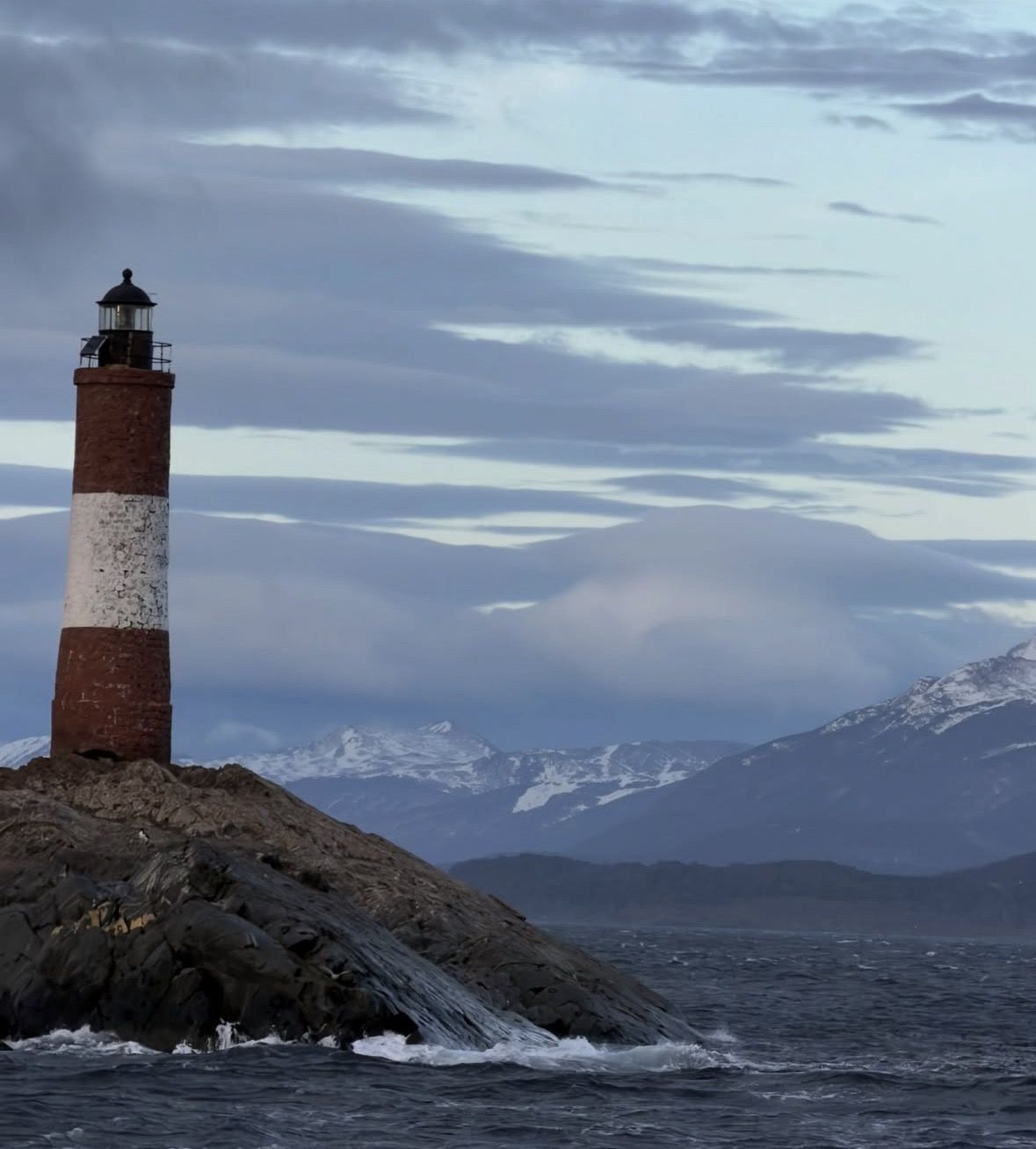
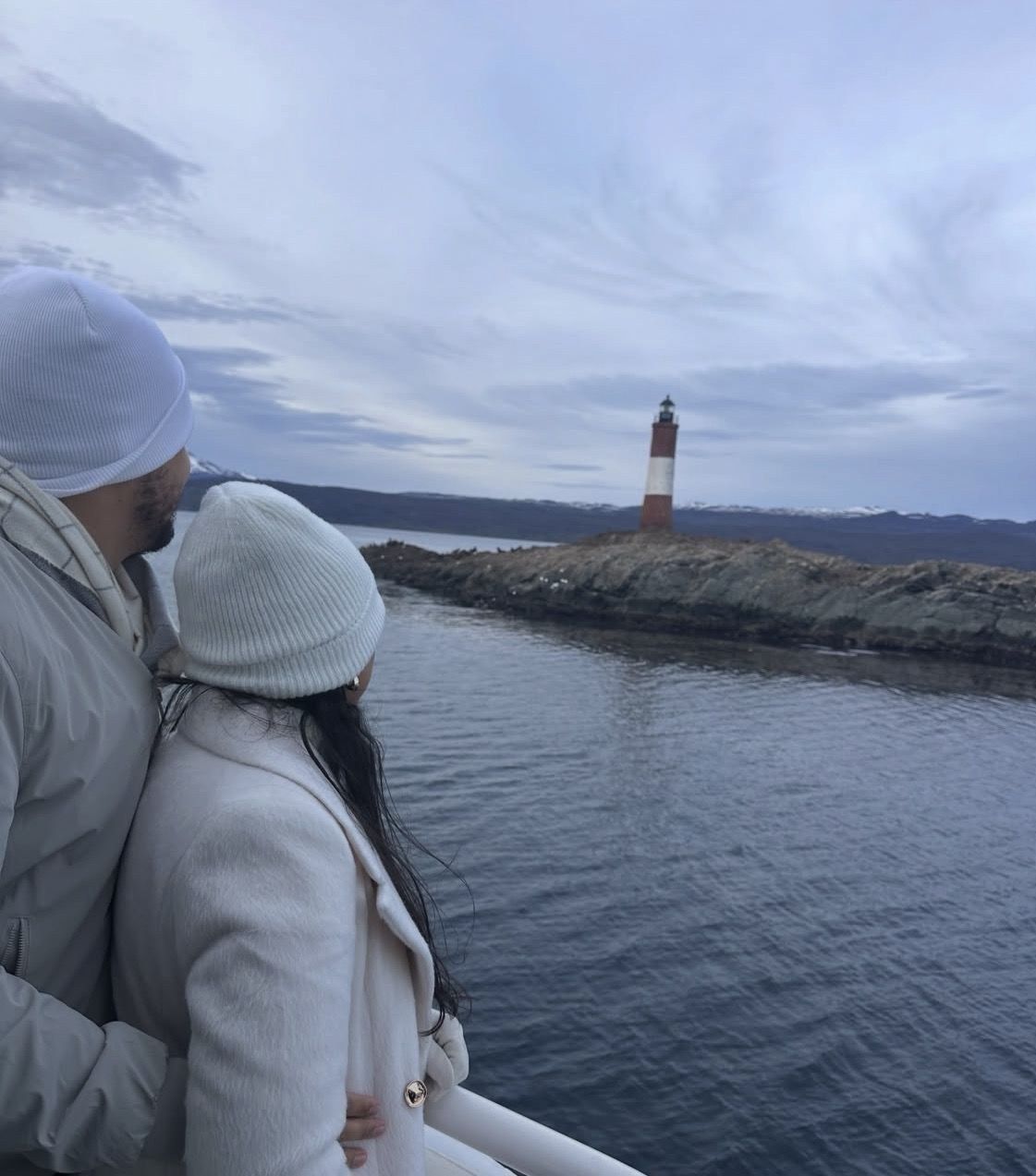
Both islets sit on the way out to Les Eclaireurs, about 20 km from Ushuaia, and the boat covers the same water coming back. Pick one rail going out and swap for the return if you want both angles.
- Stand on the sheltered side of the deck when the wind is up, then move once the boat turns; the pass is slow enough to change places twice.
- Binoculars earn their weight more than a long lens, above all for the upper ledges on the bird islet.
- Give each colony a few minutes: animals shift, birds launch, and the first thirty seconds rarely show the best of it.
- Keep hands and food to yourself: no approach, no feeding and no touching, at the islets or at any landing.
- The landings on the Bridges group, Isla Karelo or Isla H put you on a marked trail. Stay on it, and expect a landing to be dropped for safety when there is ice or frost.
The islets, the lighthouse and a walk ashore
This 4-hour navigation takes in the sea lion and bird islets and puts you on an island trail, which is as much wildlife as this channel gives you in half a day: from US$100, rated 4.8 ★ (724 reviews), with free cancellation up to 24 hours before departure.
★ 4.8/5 · 724 reviews
Penguins on the eastern island, October to April
The penguins the tours visit nest on a single island, Isla Martillo, roughly 90 km down the channel east of the port. Magellanic and Gentoo penguins breed there from October to April, with king penguins only now and then. No short lighthouse-and-islets sailing reaches it.
Protected-reserve status shapes how the birds are watched: the provincial tourism authority allows only small parties onto the island, each one accompanied by a professional guide. That is also the reason the landing has a hard capacity ceiling and the distance rules are not up for discussion. On the catamaran versions of the penguin trip nobody goes ashore at any point; one operator states plainly that the birds are watched from the boat a few metres away.
A few metres is close, but it is still a deck view over moving water, so bring binoculars and expect to brace an elbow. Getting among the birds is a different booking altogether. A single operator claims that authorisation on its own homepage, and the format is an hour inside the colony alongside a specialist guide, after a zodiac transfer that ends in stairs and a gangway because the island has no pier. Physically the landing is graded low difficulty, but it is ruled out for people with reduced mobility and advised against in pregnancy.
Dolphins and whales from the rail
Humpbacks do use this channel, and there is a count: a photo-identification catalogue compiled by CADIC-CONICET with WCS Argentina lists 191 individual animals recorded between 2013 and 2024, with sightings contributed by tourists and residents. The citizen-science project began in 2013, the year a small group of humpbacks lingered near Ushuaia from February to April for an unusually long stretch.
Whales are not reliably seen on the standard three-hour route, and there is no peak month to plan around. A whale is luck, so do not choose a sailing for it.
Dolphins fall in the same category, so watch the water on the open stretches between the islets. Keep your eyes up and off the phone while the boat is making way, because that is when a fin breaks the surface and vanishes again inside a few seconds, usually while half the deck is looking at the lighthouse.
Kelp beds and what lives under the boat
On a calm pass the macroalgae beds show from the rail, brown fronds lying flat around the islets and the landing bays. Divers work that ground in cold-water suits in every month of the year; the municipal description of it lists king crab, octopus, starfish and sea urchins.
The kelp line matters above the water too, since that is where the shore birds feed and where sea lions rest in the shallows. Scan the margin between rock and weed while the boat is manoeuvring instead of fixing on the obvious colony, and give the national park shore a look as well, where the forest runs down to the channel and the water is often flat enough to read.
Short islets sailing or the long penguin route
Book the short sailing near town if you want the most wildlife per hour. In three to four hours it covers the sea lion islet, the cormorant colony, the turn at Les Eclaireurs about 20 km out and a walk ashore on an island trail, and it runs all year. That walk ashore is part of the 4-hour Beagle Channel Navigation with Minitrekking listed here, from US$100 and rated 4.8 ★ (724 reviews); the cafeteria pours coffee, tea and hot chocolate, with nothing to eat served on board.
Take the eastern route only if penguins are why you came to Ushuaia. It costs five hours or more for a colony watched from the water, or a full day by road and boat for the hour on the island. Both are seasonal and neither adds the islets landing.
If photography and quiet rank above everything, the small-boat format is worth the swap: the 3.5-hour Sailing Ushuaia Beagle Channel in a yatch runs on a yacht rather than a catamaran, from US$110 and rated 4.9 ★, though only 11 reviews sit behind that figure, so read it as a small sample. Schedule the boat for one of your first days in Ushuaia, whatever format you choose. Cancellations of channel sailings are announced by the Prefectura Naval Argentina, and if the weather day falls on your last morning you have nowhere left to move the trip.
Questions people ask
Can I see penguins on the short lighthouse and islets cruise?
No. The colony is on Isla Martillo, about 90 km east of Ushuaia, while the short sailings stay within the first 20 km of the port and turn at the Les Eclaireurs lighthouse. Only the longer eastern routes reach the penguins, and they run in the October to April window. If penguins are not your priority, the short sailing gives you more animals per hour.
Am I allowed to feed or touch the animals?
No, at any point. Isla Martillo is a protected natural reserve where visits are restricted to small groups with professional guides, and on the catamaran penguin trips nobody goes ashore at all. At the islets the boats pass without stopping and keep their distance from the colonies. Watching, photographing and listening is what you get.
Do I need binoculars?
Bring them if you can. They matter most on the penguin routes, where the colony is watched from the boat a few metres away, and on the cormorant islet, where the upper nesting ledges are otherwise just texture. For sea lions a compact pair does the job, since the boat passes close to the rock.
What wildlife is there in winter?
Sea lions and cormorants, which are on the islets near town all year, and the short sailings keep running year round. The penguins are gone outside the October to April season. Dress for averages of 1°C to 6°C, with the heaviest snow in July and August, and take the morning departure, since you have only about seven hours of daylight to work with.
What are the best months for wildlife photography on the channel?
High summer gives you up to 18 hours of daylight and averages of about 10-15°C, so even a mid-afternoon sailing has low light to work with and the penguin season is fully open. The provincial tourism authority names late March to May as the ideal period for photography, with the forests turning, temperatures usually below 10°C and frosts increasing by May, though by then the colony is winding down.
Read also