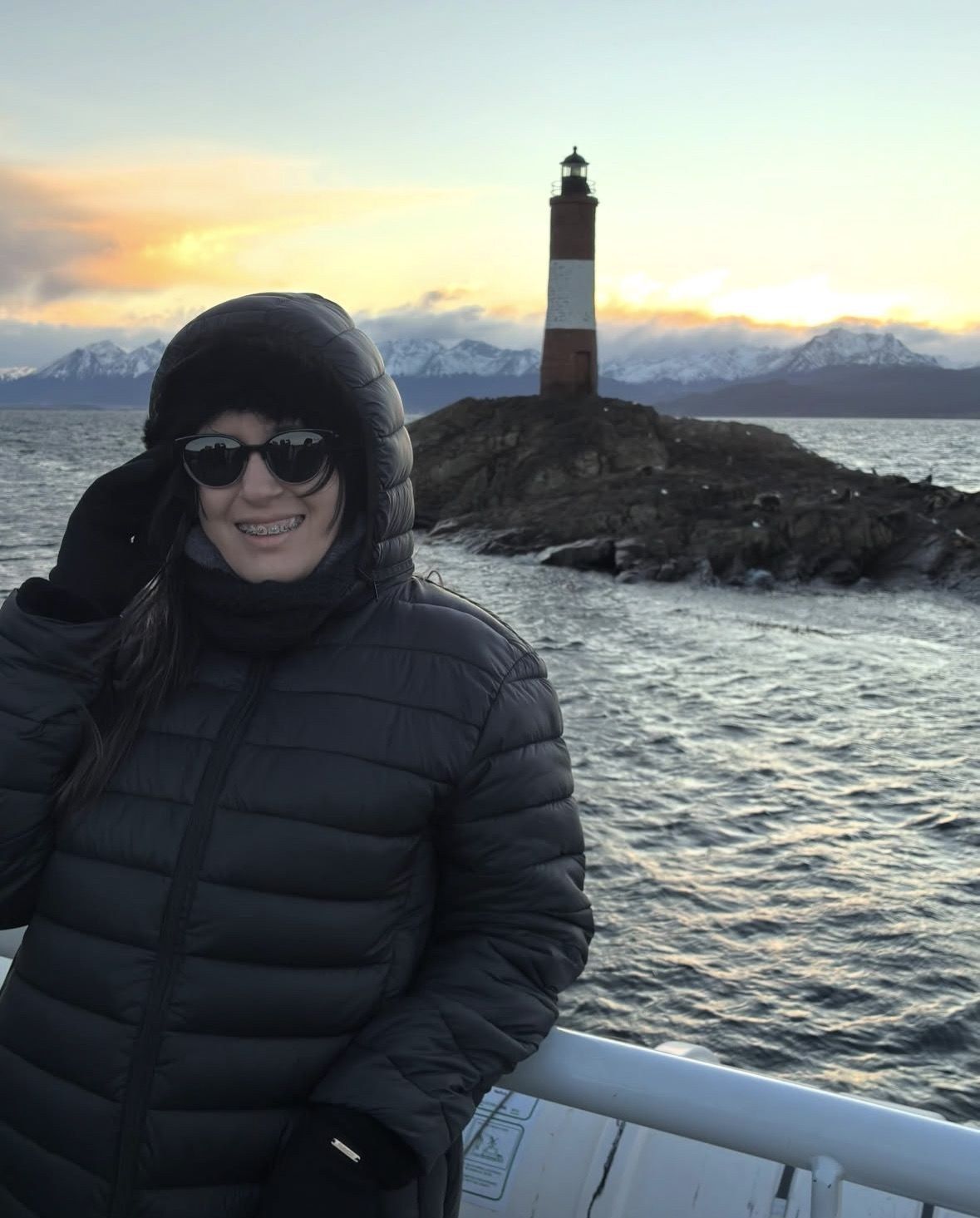
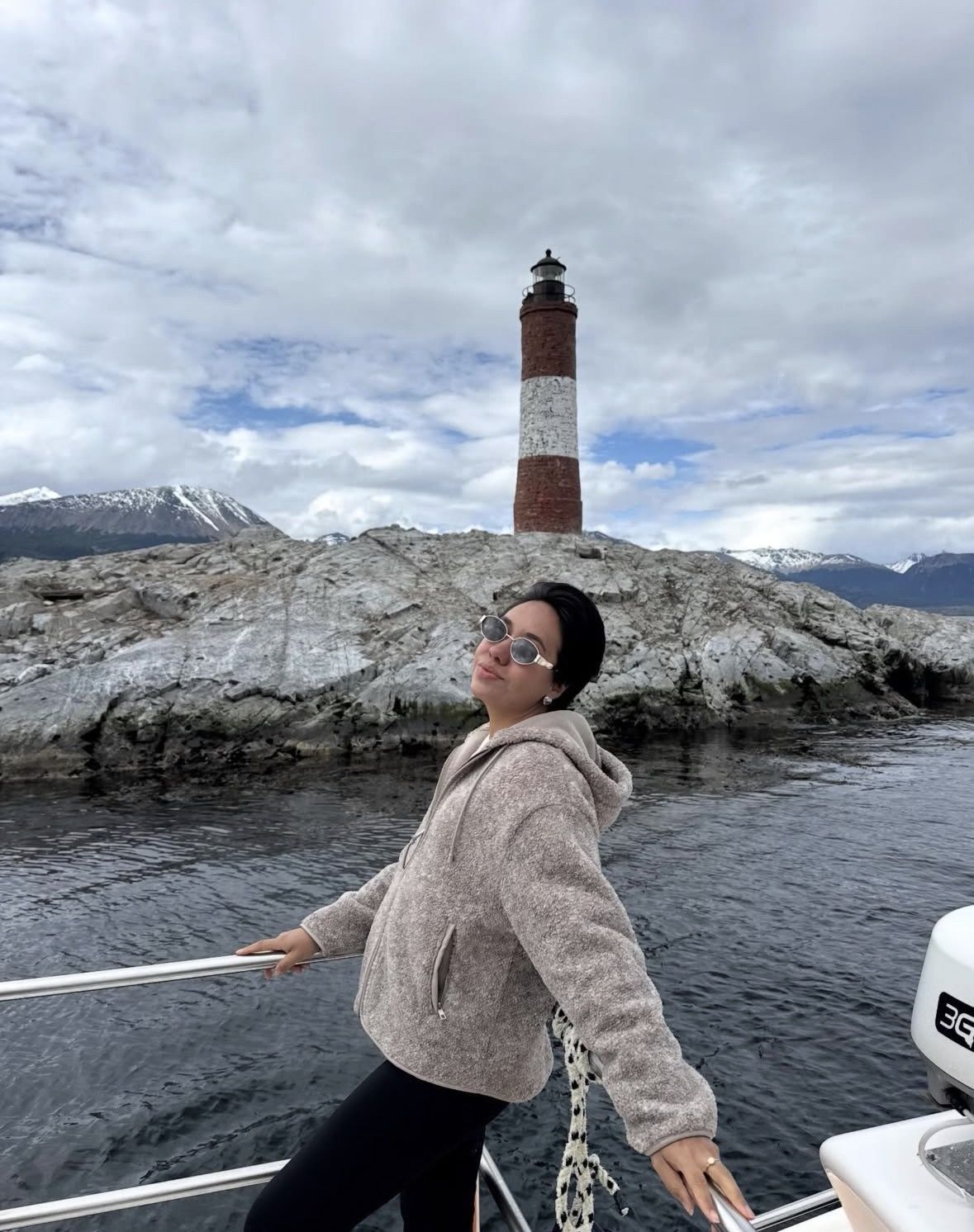
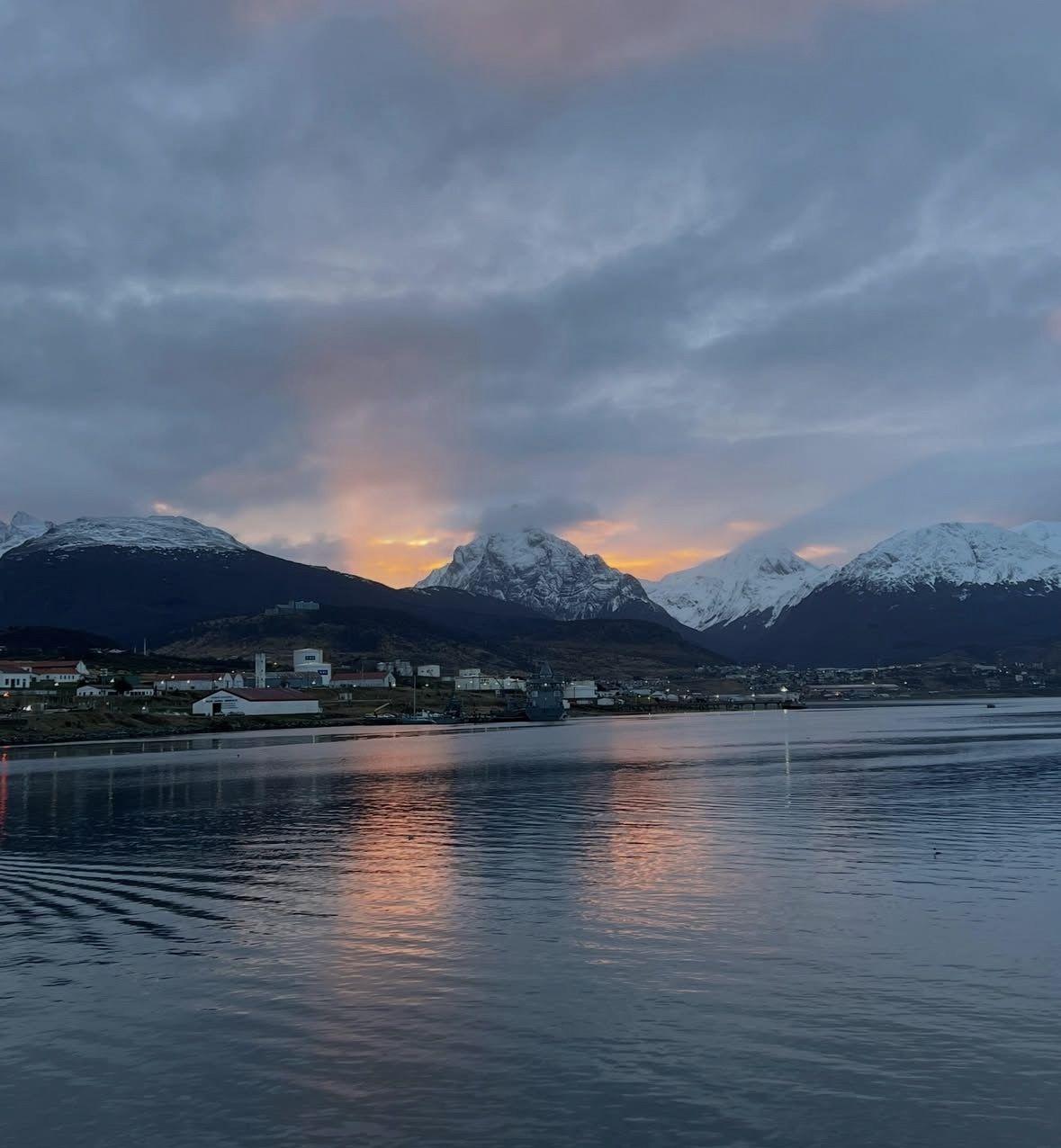
In shortDress in layers you can strip off: a base layer, a warm mid layer such as fleece, and a windproof, waterproof shell. Add a hat, gloves, closed non-slip shoes, sunglasses and sun cream. Cabins on the catamarans are heated, the deck is not, and the provincial tourism authority notes that cold and wind are constant and that sun, rain and snow can all arrive in one day.
10-15°Csummer averages
1°C to 6°Cwinter averages
about 6°Cannual average
4 hoursnavigation with minitrekking
What to wear on a Beagle Channel tour, layer by layer
Work outwards from the skin. A long-sleeved base layer, a fleece or light down mid layer, and a shell that stops both wind and water. The same three pieces work in January and in July, and the season only decides how thick the middle one needs to be.
Trousers get overlooked. Quick-drying trousers are enough on a catamaran where you can duck inside, and a waterproof pair earns its space in the bag from late March onwards, when the provincial tourism authority puts temperatures usually below 10°C with frosts increasing by May.
- Base layer: long sleeves, synthetic or merino, nothing cotton against the skin.
- Mid layer: fleece or light down, chosen because it comes off easily in a heated cabin.
- Shell: windproof and waterproof, with a hood that stays put in wind.
- Hat and gloves, in summer too; the deck wind finds your ears and fingers first.
- Closed shoes with real grip, for wet decks and wet rock on a landing.
- Sunglasses and sun cream: summer runs to as much as 18 hours of daylight and the light bounces off the water.
- A small waterproof daypack or dry bag for the camera and for the layers you peel off.
The sailing that uses the whole kit
Four hours with time on deck and a walk ashore, which is where the grippy shoes, the shell and the daypack all come into play.
★ 4.8/5 · 724 reviews
The deck is colder than the costanera
Cold and wind are constant here, the annual average sits around 6°C, and the channel adds spray and apparent wind on top of whatever the thermometer in town says. Standing at the rail while the boat idles off a sea lion islet is the coldest part of most sailings, and it is also the part nobody wants to spend inside.
The large catamarans are heated and have toilets and a cafeteria, so you will be moving between a warm saloon and an open deck repeatedly. Choose a mid layer with a full zip and a jacket you can shed without taking your gloves off, rather than one thick coat you either wear or carry.
Sun, rain and snow can all occur in the same day in Tierra del Fuego. Pack for all three whatever the morning looks like from your window, because the forecast at 08:00 in Ushuaia tells you little about what the water will be doing at 11:00.
What to pack for an Ushuaia boat trip, by trip type
The itinerary decides how much of your kit actually gets used. A sheltered catamaran run with a short walk ashore asks less of you than an hour on an island reached by zodiac.
- Catamaran with an island landing, like the 4-hour navigation with minitrekking on this site: shoes you are happy to walk a damp trail in, a shell for the deck passes, and a daypack with the spare layer in it.
- Sailing yacht: the yacht format on the channel runs 4 hours on 15-metre boats carrying 26 passengers with a hot drinks service, which means far more deck time. Upgrade the windproof layer, add a neck gaiter, and bring a hat that will not blow off.
- Penguin navigation watched from the boat: these are 5 hours or more and the colony is watched from the water a few metres away, so you want an extra mid layer and binoculars rather than better shoes.
- Zodiac crossing and the hour on the island: the crossing to Isla Martillo takes about 15 minutes and there is no pier, so you land using stairs and a gangway. Fully waterproof outer layers top and bottom, waterproof footwear, gloves that still work when damp, and both hands free.
- Colder months: frost-ready boots. One operator states that its landing in the Bridges Islands can be cancelled for safety when there is ice or frost in winter, so pick a trip that still gives you something from the deck if the walk does not happen.
Season by season, from 18 hours of light to frost
Summer averages of about 10-15°C are a town figure, rarely climbing above 25°C, and the channel is windier than the promenade. Travellers turn up for a January sailing in a t-shirt and spend the trip behind glass. The working summer kit is a thin base layer, a fleece you can carry in a bag, a windproof shell, sunglasses and sun cream.
Winter sailings are entirely reasonable if you dress for them: averages of 1°C to 6°C, heaviest snow in July and August, and about 7 hours of daylight, which is the real argument for taking the morning departure.
| Season | Temperatures (provincial tourism authority) | What changes in your bag |
|---|
| Summer | about 10-15°C, rarely above 25°C | thinner mid layer, sunglasses and sun cream for up to 18 hours of daylight, shell stays in |
|---|
| Late March to May | usually below 10°C, frosts increasing by May | warmer mid layer, waterproof trousers, gloves in the pocket |
|---|
| Winter | mean values between 1°C and 6°C; the deepest snow falls in July and August | full winter kit and frost-ready boots, and about 7 hours of daylight to work with |
|---|
Cameras, binoculars and food on board
Salt spray is the thing that ruins gear here. Keep the camera in a dry bag between stops, carry a cloth that is not the one in your pocket, use a strap with both hands on the rail, and change lenses inside the cabin rather than on an open deck. Binoculars earn their weight on the penguin sailings, where the birds are watched from the boat.
Food is worth sorting before you board. One channel operator does not allow passengers to bring food aboard that was not bought from the company, and the 4-hour navigation on this site serves cafeteria coffee, tea and hot chocolate with no food offered on board. Eat in town first and treat the hot drinks as warmth rather than lunch.
Boarding adds time outdoors that is not counted in the duration. Presentation for the 4-hour navigation is 30 minutes before departure at the Patagonia Explorer office in the tourist port, on Avenida Prefectura Naval Argentina at Calle Roca, so the outer layer goes on before you leave the hotel.
Dressed for it, now pick the sailing
With the layering sorted, the choice of trip gets simpler. For a first sailing, take the 4-hour Beagle Channel Navigation with Minitrekking, from US$100 and rated 4.8 ★ (724 reviews): it puts you on deck for the islets and on foot on an island, which is exactly what the shoes and the shell are for.
Keep the full penguin day for the case where walking among the birds is the reason you came, and accept the extra waterproofing the zodiac landing demands. Plan whichever sailing you choose for early in your stay, since local operators advise exactly that in case weather pushes you to a different day.
Questions people ask
Do I need waterproof trousers on a Beagle Channel tour?
On a heated catamaran where you can step inside, quick-drying trousers are enough most of the year. They become genuinely useful from late March to May, when temperatures sit usually below 10°C with frosts increasing by May, and they are close to essential on anything involving a zodiac crossing and an hour standing on an island.
Are gloves and a hat overkill in January?
No. Summer averages are about 10-15°C and rarely above 25°C, but cold and wind are constant and the deck is where you will want to be. A thin pair of gloves and a hat that stays on in wind take up almost no room, and most people put them on somewhere between the first islet and the turn.
What footwear works for the island walk?
Closed shoes with a grippy sole. The trail on the Bridges group is short but the rock and the path get wet, and the deck does too. In the colder months go for boots that cope with frost, bearing in mind that one operator states the landing can be cancelled for safety when there is ice or frost.
Can I bring my own snacks and drinks aboard?
Not always. One operator on the channel does not permit food brought aboard that was not purchased from the company. The 4-hour navigation on this site includes cafeteria service with coffee, tea and hot chocolate and states that no food is offered on the tour, so plan to eat before or after.
What happens to my plans if the weather turns?
Cancellations of channel sailings are announced officially by the Prefectura Naval Argentina; otherwise boats depart on schedule, which is why clothing matters more than the forecast. Operators here recommend putting the navigation early in your stay so a cancelled day still leaves room to sail. The 4-hour navigation on this site offers free cancellation up to 24 hours before departure.
Read also